Strength Training for Beginners: How to Get Started at the Gym
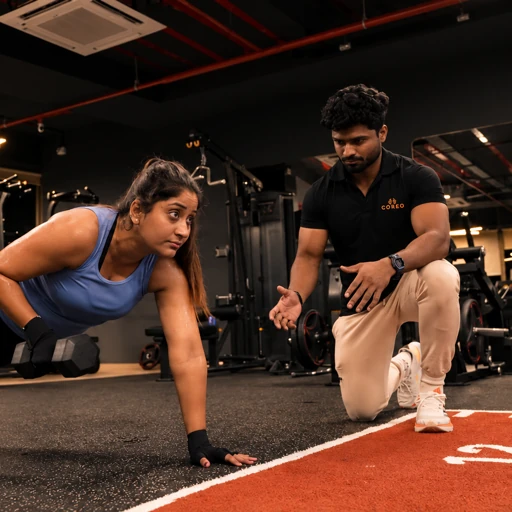
New to strength training? Learn how to choose beginner-friendly exercises, build a manageable workout routine, improve your technique and track progress without making fitness unnecessarily complicated.
Walking into a gym for the first time can feel intimidating.
There are machines you've never used, people lifting weights that seem impossibly heavy and workout routines that look more complicated than they need to be.
Here's the good news: you don't need to know everything before you start.
Strength training is a skill you can learn gradually. Your first goal isn't to lift the heaviest weight or complete the most complicated workout. It's to understand the basics, practise good technique and build a routine you can maintain.
Here's how to get started.
What is strength training?
Strength training is exercise that challenges your muscles against resistance.
That resistance might come from dumbbells, barbells, weight machines, resistance bands or your own body weight.
When performed consistently and progressed appropriately, strength training can help improve muscular strength and support muscle development. It can also contribute to everyday activities that require lifting, carrying, pushing and pulling.
You don't have to be an athlete or an experienced gym-goer to benefit from it.
Step 1: Set a realistic starting goal
Before planning your workouts, decide what you want to work towards.
Your first goal might be learning the basic exercises, attending the gym consistently or gradually becoming stronger.
Avoid trying to change everything at once. You don't need an elaborate workout split, a complicated supplement routine or a perfect diet to begin.
Choose a manageable starting point and give yourself time to develop the habit.
If you have an existing injury, a relevant medical condition or uncertainty about which exercises are suitable for you, seek appropriate professional advice before starting.
Step 2: Learn the basic movement patterns
Rather than memorising dozens of exercises, start by understanding a few fundamental movement patterns.
Squatting
Squat movements train the muscles used when sitting down and standing up. Depending on your ability and equipment, you might begin with a bodyweight squat or a suitable squat variation.
Hip hinging
Hip-hinge movements involve bending at the hips while controlling your torso. They form the basis of exercises such as certain deadlift variations.
Pushing
Pushing movements include exercises such as push-ups, chest presses and shoulder presses. The appropriate variation depends on your strength and experience.
Pulling
Pulling movements include rows and pulldowns. They train muscles involved in bringing resistance towards your body.
Core stability
Core exercises challenge your ability to control your trunk and maintain suitable positioning during movement. Examples include appropriately scaled plank variations.
You don't need to master every movement in your first session. Learn gradually, practise with manageable resistance and ask for help when necessary.
Step 3: Start with a manageable routine
Beginners often assume that more workouts mean faster results.
In reality, your routine needs to balance training with recovery and your other commitments.
For many healthy adults, two or three full-body strength sessions per week can be a practical starting point, although the right schedule depends on your circumstances, experience and recovery.
A simple session might include:
One squat or other lower-body movement.
One hip-hinge movement.
One pushing exercise.
One pulling exercise.
One core exercise, if appropriate.
This is a framework rather than a personalised programme. Exercise selection, sets, repetitions and resistance should reflect your ability and goals.
Begin with manageable loads. Focus on controlled repetitions and learn how each exercise should feel before increasing the difficulty.
Step 4: Learn proper technique before adding weight
It's tempting to increase the weight every time you visit the gym. However, adding resistance before you can control the movement may make an exercise unnecessarily difficult or increase injury risk.
Pay attention to your starting position, range of motion, balance and control. Avoid using momentum to force repetitions that you cannot perform comfortably.
If you're unsure how to use a machine or perform an exercise, ask a qualified fitness professional for guidance.
You don't need perfect technique on day one. You need to learn, practise and make sensible adjustments.
Step 5: Understand progressive overload
Progressive overload means gradually increasing the challenge placed on your body as you adapt.
That doesn't always mean lifting heavier weights.
Progress may involve performing an additional repetition with good technique, improving movement control, completing your planned workout more consistently or eventually increasing resistance.
Keep a simple training log. Record your exercises, weights, repetitions and how challenging the session felt.
Over time, those records help you understand what's improving and where you may need to adjust your routine.
Step 6: Give recovery the same attention as training
Muscles need time to recover between demanding sessions.
Sleep, nutrition, hydration and sensible training volume all contribute to recovery. Avoid turning every session into an all-out effort, particularly when you're still learning.
Some muscle soreness can occur after unfamiliar exercise, but sharp pain, significant swelling or persistent symptoms shouldn't be ignored. Stop an exercise that causes concerning pain and seek appropriate medical advice.
Consistency comes from finding a training schedule you can recover from, not from exhausting yourself every time.
Common strength-training mistakes beginners make
Trying to copy advanced lifters. An experienced person's routine may not suit your starting point.
Changing the programme every session. Repeating suitable exercises gives you an opportunity to practise and track progress.
Increasing weights too quickly. Progress should be gradual and supported by good movement control.
Ignoring recovery. More training is not automatically better if you cannot recover adequately.
Expecting immediate results. Strength and fitness develop over time. Focus on what you can control today.
Feeling embarrassed about asking questions. Learning how to train is part of being in a gym. Asking for guidance is sensible, not a weakness.
How Coreo can support your training
At Coreo in Balewadi, Pune, members have access to a strength-training area equipped for a range of resistance exercises.
For those who prefer additional structure, Coreo also offers personal training and other training options, including group fitness and functional training.
The right starting point depends on your goals and experience. You can begin by exploring the facility and discussing what you want to achieve.
Final thoughts
You don't need to become a fitness expert before your first workout.
Start with manageable goals, learn a few fundamental movements, follow a routine you can sustain and track your progress. Increase the challenge gradually as you become more comfortable.
Your first month is an opportunity to build the foundation for everything that follows.
Ready to get started? Book a free trial at Coreo and take your first step towards a more consistent training routine.
Frequently asked questions
How many days a week should a beginner lift weights?
Two or three sessions per week can be a reasonable starting point for many people. Your schedule should account for your experience, goals and recovery.
Should beginners use machines or free weights?
Both can be useful. Machines can help you learn certain movements, while free weights provide different training opportunities. Choose suitable exercises and learn to perform them correctly.
How long should a beginner's workout last?
There is no single ideal duration. A focused session that covers your planned exercises and allows time to learn technique is more useful than staying longer simply for the sake of it.
Can beginners build muscle?
Yes. Beginners can develop strength and muscle with appropriate resistance training, sufficient nutrition and recovery, and consistent practice. The rate of progress varies between individuals